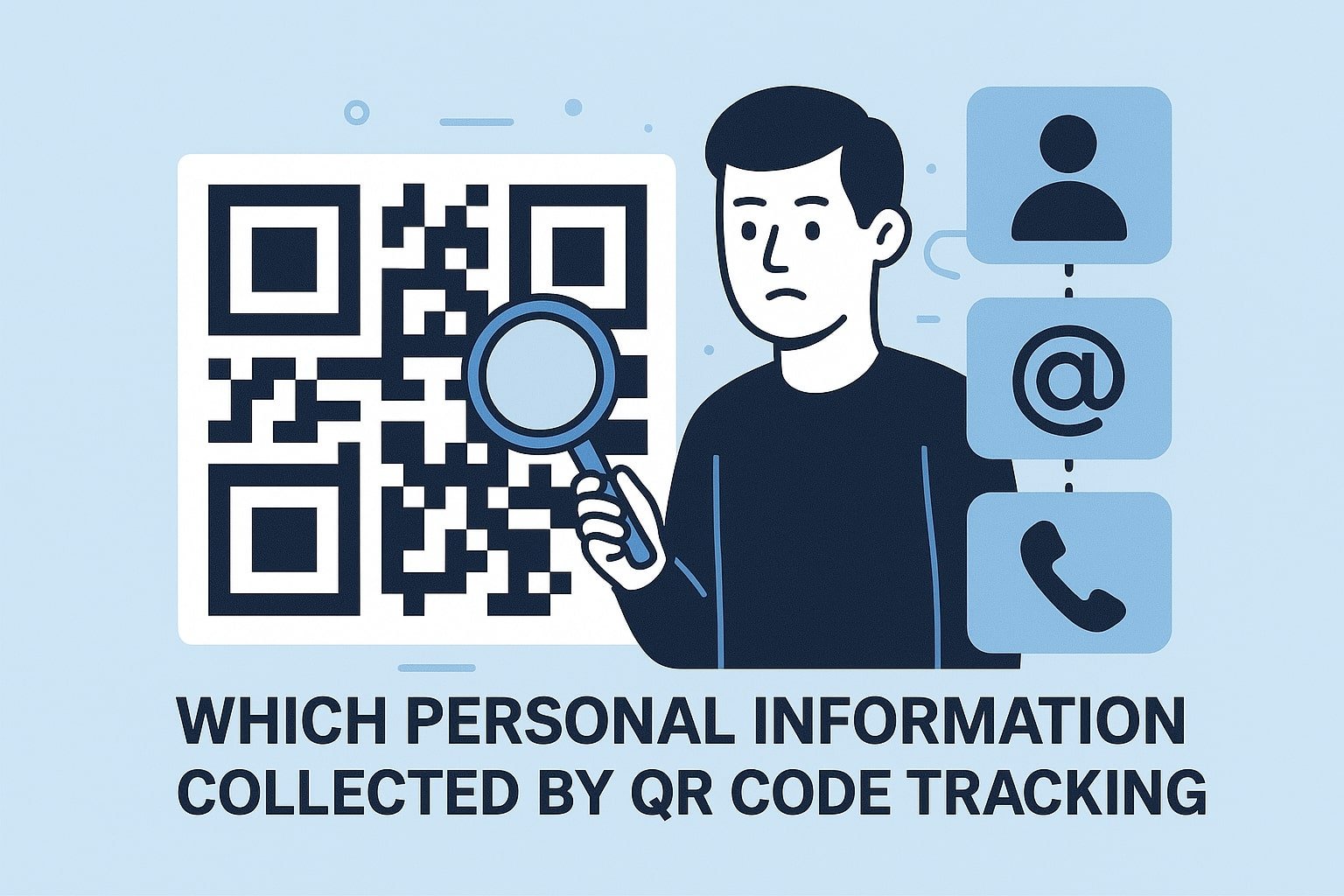
When you interact with QR Codes, particularly those used in marketing and data collection, several types of personal information may be collected. Here's a breakdown of what you might expect:
Contact Information
If the QR Code leads to a form or sign-up page, it may request your name, email address, phone number, or mailing address for marketing or account creation.
Geolocation Data
Scanning a QR Code can reveal your location, primarily if the code directs you to a mobile app or website that tracks your geographic position. This data can help businesses analyze customer demographics and behavior.
Device Information
QR Code tracking may also gather details about the device you used to scan the code. This can include the device type, operating system, and browser version, which help businesses understand their audience's technology preferences.
Usage Behavior
Many QR Codes link to websites or apps that track user engagement metrics. This can include how long you stay on the site, the pages you visit, and actions taken (like purchases or form submissions). Such data is valuable for improving marketing strategies and user experiences.
Referral Information
QR Codes often track the source from which a user accessed them. This helps businesses determine the effectiveness of specific marketing campaigns or physical placements (e.g., posters, flyers).
Cookies and Tracking Technologies
If the QR Code leads to a website, cookies, and similar tracking technologies may be employed to monitor user behavior and preferences over time, allowing personalized marketing efforts.
It's important to note that businesses should comply with data protection regulations, such as GDPR or CCPA when collecting and processing personal information. Users should be informed about what data is collected and how it will be used, often outlined in a privacy policy.
When scanning QR Codes, always consider the source and the information requested and ensure that it aligns with your comfort level regarding data sharing.
Conclusion
In conclusion, the Advanced QR Code remains a valuable tool in our increasingly digital world, offering convenience and efficiency in accessing information and services. Despite some security concerns, their benefits—such as quick access to websites, contactless payments, and interactive marketing—far outweigh the risks when appropriate precautions are taken.
By implementing best practices, such as verifying sources and utilizing security measures, you can enjoy the advantages of QR Codes while safeguarding your personal information. Whether you're a consumer or a business, embracing QR Codes can enhance connectivity and streamline experiences, making them a smart choice for today's tech-savvy landscape.
So, go ahead and scan with confidence—stay informed and vigilant!